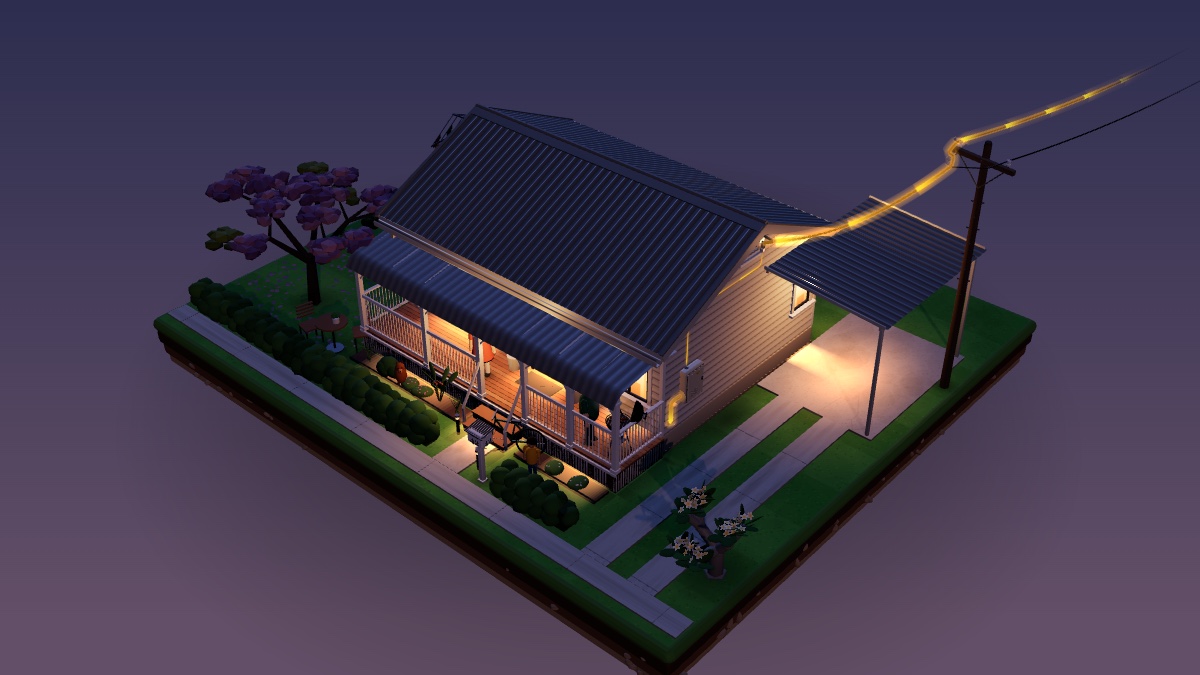
In short: A battery on the wall does not mean the lights stay on in a storm. Backup is a design choice made at install, not a feature in the box. There are four levels: no backup, a few circuits, the whole house, and the whole house with solar still charging the battery while the grid is down. Solar on its own shuts off in a blackout. A sensible SEQ setup, a 16 kWh battery with the fridge, lights and a few power points kept alive, starts from about $10,750 after the rebate added to existing solar, or about $18,300 with solar included (indicative, as at October 2026). The federal battery rebate drops on 1 January 2027 and it goes by install date, so a December install is already tight.
Ex-Tropical Cyclone Alfred in March 2025 knocked out power to more than 290,000 Energex customers. The storms on 24 November 2025 took out another 162,000 homes and brought down more than 900 powerlines. Some people were back on in hours. Some waited days.
Storm season is here again. The question we get asked most at this time of year is some version of “if I get a battery, will my power stay on?” The honest answer is: it depends entirely on how it’s installed. Plenty of homes in SEQ have a battery and still go dark with the rest of the street, because nobody set the backup up.
This post is what actually stays on, what doesn’t, what it costs to do it properly, and when you’re better off keeping your money.
The playbook
- Understand the four levels of backup. Pick the one you actually need, not the one that sounds best.
- Know why a “backup ready” battery can still go dark. Three things have to be done at install.
- Choose your circuits. Fridge, lights, a few power points, the modem. Not the oven.
- Size the battery for the job. Bigger if you want the whole house, or if you want it to last more than a night.
- Get it tested at handover. Flick the main switch off and watch what stays on.
The four levels of backup
SolarQuotes describes backup in four levels. It’s the clearest way to explain it, so we’ll use the same shape.
a) Level 0: no backup. The battery saves you money every day, charging from the roof and running the house through the evening. But when the grid drops, it drops too. This is how a lot of batteries get installed, because it’s the cheapest option.
b) Level 1: a few circuits. A backup circuit keeps a chosen set of things alive: the fridge, some lights, a few power points for phones and the modem, maybe the garage door. This is the setup we recommend for most homes. It covers what matters and the battery lasts.
c) Level 2: whole house. Every circuit stays on. Sounds ideal, but your battery has to carry your biggest loads. A ducted aircon, an oven and a pool pump running at once will trip a small battery or drain it in a couple of hours. Whole-house backup suits larger batteries and three-phase homes.
d) Level 3: whole house, and the solar keeps charging the battery. The grid is down, the house is running off the battery, and the panels are topping it back up during the day. This is the level where you can ride out a multi-day outage. It needs to be designed in.
Why a battery “with backup” can still go dark
The box says backup. The brochure says backup. And the house still goes black.
a) It needs a way to disconnect from the street. When the grid fails, your system has to cut itself off from the powerlines before it can run the house. That’s a gateway or changeover device. Some all-in-one systems, like the GoodWe ESA, have it built in. Others need a separate box, and if it wasn’t quoted, it wasn’t installed.
b) The circuits have to be chosen and wired at install. Backup only covers what’s physically connected to the backup side of the switchboard (the box with all your circuit breakers in it). If nobody sat down with you and picked the circuits, there’s nothing on backup.
c) Solar on its own shuts down in a blackout. A standard solar inverter turns itself off the moment the grid drops, so it can’t feed power into lines that crews are working on. Panels on the roof, no power in the house. Only a battery with a backup circuit changes that.
And a fourth: it needs testing. On every install we flick the main switch off before we leave and we watch what stays on together. There’s more on what a proper handover looks like in what a safe home battery installation involves.
What it costs, what you save
As at October 2026, and indicative only, from the packages we quote:
- Battery added to existing solar, a few circuits on backup: from about $8,550 for 8 kWh, $10,750 for 16 kWh, $13,600 for 24 kWh, after the federal rebate.
- Solar and battery together: 10 kW of solar plus 16 kWh with a few circuits on backup from about $18,300. A three-phase 13.3 kW plus 16 kWh with whole-house backup from about $21,700.
- Whole-house backup adds a few hundred dollars of labour over a few circuits on the same battery. The real cost difference is that it pushes you to a bigger battery.
Switchboard upgrades, double-storey roofs and long cable runs are extra, because they’re real cost.
The daily saving is where the money comes back. A battery that soaks up your solar and runs the house through the evening peak pays for itself whether or not a storm ever comes. If you’re on the Solar Sharer free window (11am to 2pm), a battery is what makes it worth it, because the evening rate on those plans sits around 64 cents compared to about 33 cents flat. Backup is the bit on top that you hope you never use.
Will this work for my house?
- Yes if you have solar already and a bill worth saving. Adding a 16 kWh battery with a few circuits on backup is the most common job we do.
- Yes if you’re putting solar and a battery in together. Backup is cheapest to design in on day one.
- One thing to note if you want whole-house backup on a single-phase home. It works, but check the biggest loads first. If the aircon and the oven both need to run, it’s a bigger battery or a shorter list.
- No if you have no solar and no plan to add it. The federal rebate only applies to a battery attached to rooftop solar, so the sums get a lot harder.
Ask us what’s on backup in your quote
A worked example
A family in Brisbane’s southside with 6.6 kW of solar already on the roof, single phase, a bill around $700 a quarter before solar came down.
They add a 16 kWh GoodWe ESA with a few circuits on backup: the fridge, the kitchen and lounge lights, two power points, the modem and the garage door. From about $10,750 after the rebate (indicative, as at October 2026). The aircon, oven, hot water and pool pump stay on the normal side of the board.
On a normal day the battery charges from the roof and runs the house through the evening. In a blackout, the backup circuits carry on without them noticing. The fridge, the lights and the phones are small loads, so 16 kWh covers them overnight, and if the sun comes out the next day the roof tops it back up.
The same house on a 24 kWh battery with whole-house backup would be about $13,600 plus the extra backup labour, and they’d be able to run the aircon in a blackout. Whether that’s worth around $3,000 more is their call, not ours.
When not to bother
Backup is not for everyone, and we’d rather say so now than after you’ve paid for it.
- Your outages are rare and short. If the power goes off twice a year for twenty minutes, a torch is a better investment than a gateway. Get the battery for the daily saving and skip the backup.
- Your bill is small. Under around $1,500 a year, a battery is slow to pay back with or without backup. The rebate helps but it doesn’t fix the maths.
- No solar and no plan to add it. The rebate needs rooftop solar. Without it you’re paying full price for a battery that can only charge from the grid.
- You’re being sold it on VPP income. Queensland VPP money is small, around $200 a year at the caps. Nice to have, not a reason to buy.
What to do next
Two dated things are worth knowing.
The federal battery rebate is at factor 6.8 until 31 December 2026, roughly $250 per usable kWh, with the full rate on batteries up to 14 kWh. On 1 January 2027 it drops to 5.7, which is about 16% less. It’s set by the day the battery is installed, not the day you sign, so a December install is already tight. The dollar figures by battery size are in the rebate step-down post.
Installers book out in November and December every year. If you want backup before the worst of the summer storms, October is the month to get a quote.
Get a quote with the backup circuits spelled out. We’ll tell you which circuits are on backup, which aren’t, and whether it’s worth it for your house. Sometimes the honest answer is that it isn’t.